Walk the Vanished Waterfront: Telok Ayer Temples Tour Comes to Singapore HeritageFest 2026
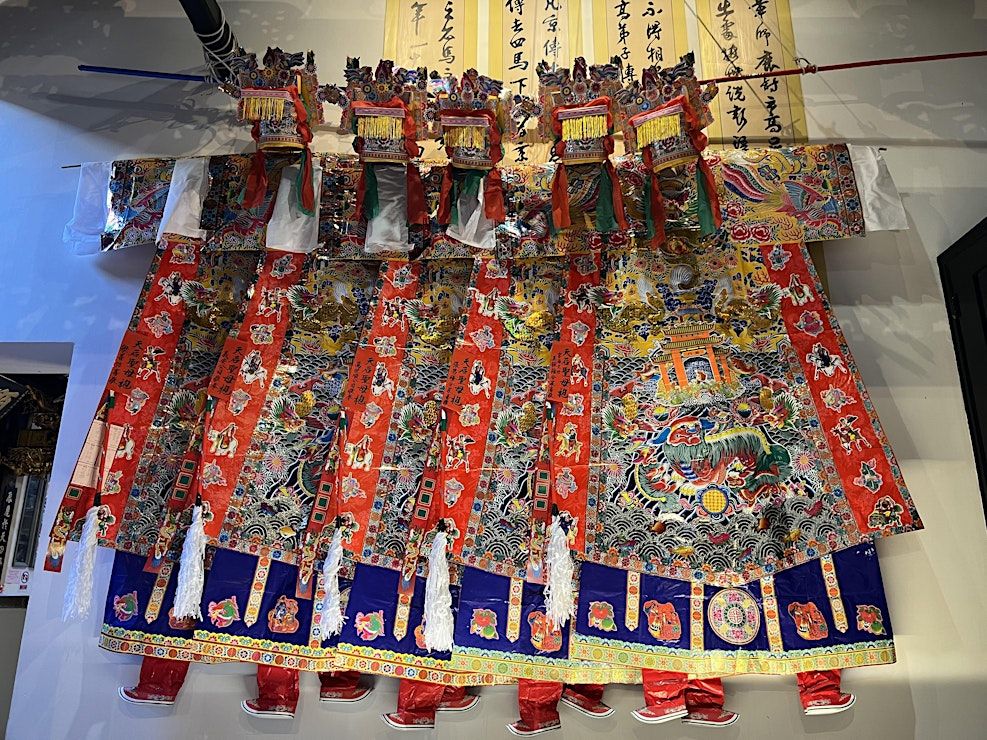
Telok Ayer Street used to face the sea. In the early 1800s, newly arrived Chinese immigrants stepped off their junks onto planks across the mud and walked straight to the temple to give thanks. That shoreline is long gone, but the temples remain. On 23 August 2026, a Singapore HeritageFest tour led by a licensed STB guide will explain what is still visible if you know where to look.
Thian Hock Keng: The Temple That Met the Boats
The tour starts at Thian Hock Keng, Singapore's oldest Hokkien temple. It was built between 1839 and 1842, funded partly by a land donation from Tan Tock Seng, and constructed without nails. The builders used traditional Chinese joinery, locking wooden brackets and stone plinths together so precisely that the structure has survived nearly two centuries.
The temple is dedicated to Mazu, the Goddess of the Sea. According to legend, she was once a mortal girl in Fujian named Lin Mo Niang who could see storms coming before anyone else. Sailors began praying to her, and over 700 years she received at least 36 imperial titles. Two imperial scrolls from that period are preserved inside the temple, and the tour will examine them.
For the immigrants who arrived in the 1800s, Mazu was not abstract. She was the reason they were alive. The journey from southern China took weeks or months, through typhoons, pirates, and open ocean. Stepping onto Telok Ayer and walking to Thian Hock Keng was often the first thing they did after landing.
What the Tour Covers
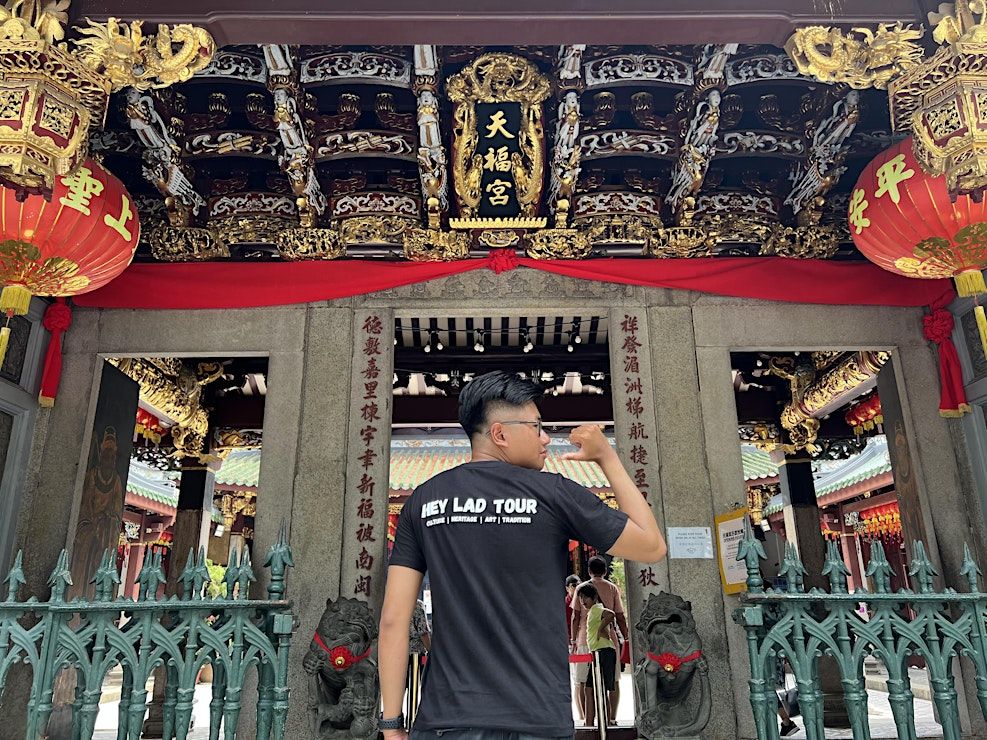
Over two hours, the guide will walk participants through the temple's visual language. The roof ridges, cloud carvings, colour choices, and placement of animals all carry meaning. You will learn how to read them, and how to tell which workshop produced particular carvings.
The route also touches on the broader neighbourhood. Within a few minutes' walk, a Hokkien temple, a Tamil Muslim mosque at Nagore Dargah, and a Chinese Methodist church have coexisted for over a century. That was not an accident. It was built into the street plan and the social expectations of a port city where labourers, traders, and religious groups needed to live close to one another.
Mazu Around the World
Mazu temples are found in every major port city that received Chinese migration: Bangkok, Penang, San Francisco, Taiwan. On the 23rd day of the third lunar month, her birthday, many of these temples hold grand ceremonies. The tour will explain how a regional Fujian deity became part of a global diaspora network, and why Thian Hock Keng remains one of the most important nodes in that network today.
Booking and Practical Notes
Tickets cost SGD 30.00 per person and must be booked in advance. The tour needs at least four participants to run; if the minimum is not met, it will be cancelled with a full refund. The tour involves outdoor walking between venues. Photographs and videos may be taken for publicity.
The meeting point is Thian Hock Keng at 158 Telok Ayer Street. It is a three-minute walk from Telok Ayer MRT Exit A, and within reasonable walking distance of Chinatown and Raffles Place MRT stations.
Practical Details
- Date: Sunday, 23 August 2026
- Time: 2:30pm to 4:30pm
- Meeting Point: Thian Hock Keng Temple, 158 Telok Ayer Street, Singapore 068613
- Nearest MRT: Telok Ayer (DT18) Exit A
- Price: SGD 30.00 per person
- Organiser: HeyLadTour (licensed STB tourist guide)
- Part of: Singapore HeritageFest (SHF) 2026 by HeritageSG / National Heritage Board
- Minimum Participants: 4 (cancelled with full refund if not met)
- Booking: Advance booking via Eventbrite